What Is an iQR Code?
An iQR code, short for Intelligent Quick Response code, is an advanced two dimensional barcode format developed by Denso Wave, the company that originally created the QR code. It was designed to overcome the limitations of traditional square codes, particularly in industries where available labeling space is extremely limited.
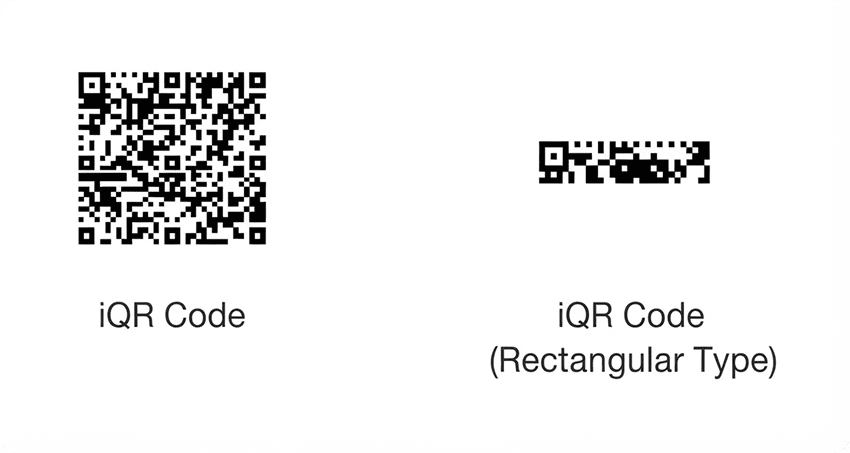
Unlike standard QR codes, iQR codes can be printed in either square or rectangular formats. This flexibility allows them to fit on narrow, curved, or unusually shaped surfaces where conventional codes would be difficult to use.
Another major advantage is data capacity. An iQR code can store significantly more information than a standard QR code. This makes it valuable for manufacturing, healthcare, logistics, electronics, and other sectors that require detailed tracking information directly on products or components.
Key Differences: iQR Code vs. Traditional QR Code
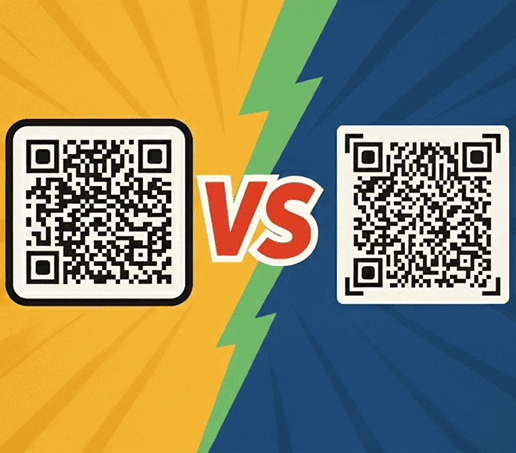
Traditional QR codes remain the preferred choice for most business applications, while iQR codes address space, capacity, and durability limitations. Compare their specifications below:
|
Feature / specification |
Traditional QR Code |
iQR Code |
|---|---|---|
| Shape Options | Strictly Square | Square and Rectangular |
| Maximum Data Capacity | Up to 7,089 numeric characters | Up to 40,000 numeric characters |
| Maximum Error Correction | Up to 30% data recovery (Level H) | Up to 50% data recovery (Level S) |
| Minimum Module Size | 21 × 21 modules (Version 1) | 9 × 9 modules (Square) / 5 × 19 (Rectangular) |
| Maximum Module Structure | 177 × 177 modules (Version 40) | 422 × 422 modules (Version 61) |
Why Businesses Choose iQR Codes: Key Operational Benefits
When your products move from the factory to the warehouse and then out for delivery, even a tiny bit of label space can make a difference. That's where iQR codes come in. They solve a few problems that regular QR codes don't handle very well.
Ultra-compact footprint for small products
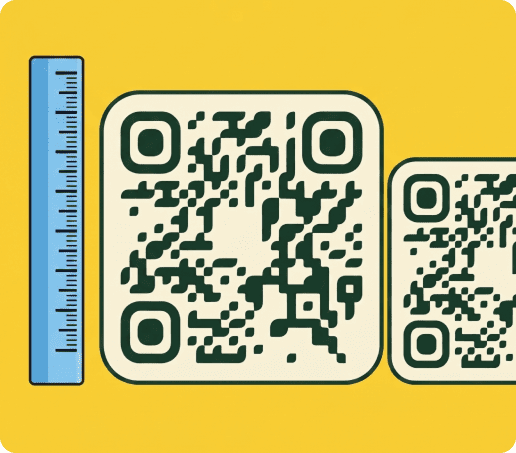
iQR codes can be up to 30% smaller than traditional QR codes while storing the same amount of information. This allows you to place detailed product data on small medical vials, compact electronics, sensors, and limited packaging surfaces without sacrificing readability.
A smaller label also gives manufacturers a little more flexibility with product design and branding, while still making it easy to track products throughout the supply chain.
Rectangular shapes for cylindrical surfaces
Standard square codes often become distorted when printed on cables, tubes, pipes, and other curved objects. Distortion reduces scanning performance and increases operational errors.
The rectangular structure of an iQR code allows it to follow the straight axis of cylindrical products. This improves readability and enables reliable identification of items that traditionally present labeling challenges.
Heavy-duty error correction for industrial settings
Factory and warehouse environments aren't always clean. Labels can end up scratched, dirty, covered in grease, or exposed to chemicals during normal use.
iQR codes include strong error correction, so they can still be scanned even if part of the code has been damaged. In many cases, they can recover information even when up to 50% of the code is no longer readable. This helps prevent delays in inventory tracking and production.
How to Create an iQR Code
Creating an iQR code differs from creating a standard marketing QR code. Because iQR is a proprietary technology developed by Denso Wave, you typically need specialized software that supports the format. The general process involves:
-
Define the data you want to encode
Such as serial numbers, manufacturing records, inventory details, or asset information
-
Select the appropriate iQR format
Depending on the available space, you can choose either a square or rectangular layout
-
Determine the required error correction level
Higher levels improve durability in harsh environments but increase the symbol size.
-
Use a reliable iQR code generator
Use authorized software that supports the iQR specification
-
Test the symbol
Using compatible scanners before deployment
-
Print and apply the code to products
Components, packaging, or equipment
It is important to note that our platform specializes in public facing solutions such as URLs, PDFs, app downloads, digital business cards, and customer engagement campaigns.
If you need a URL QR code solution or a PDF sharing QR code, our generator is designed for those applications. Industrial iQR code generation generally requires specialized tools available through official Denso Wave channels and approved software providers.
Creative B2B Use Cases for iQR Codes
Many companies use iQR technology to solve labeling challenges that standard QR codes cannot address effectively.
|
Use Case |
Why iQR Codes Work Well |
|---|---|
| Pharmaceutical Asset Management | Fits tiny medical vial caps while storing complex batch histories. |
| Aerospace Hardware Labeling | Etches rectangular codes onto curved cables and fuel lines securely. |
| High Density Electronics Inventory | Encodes 40,000 characters of hardware telemetry directly onto circuit boards. |
| Secure Access Control Systems | Maximizes error correction on employee badges subject to daily physical wear. |
Frequently Asked Questions
Are iQR codes safe?
Toggle faqs
Yes. An iQR code uses the same fundamental scanning principles as traditional QR codes. The safety risk comes from the destination content rather than the code itself. As long as you control the encoded information and direct users to trusted resources, an iQR code provides a secure method for sharing and storing data across industrial and commercial environments.
Can standard smartphone cameras scan an iQR code?
Toggle faqs
In some cases, yes. However, compatibility depends on the smartphone model, operating system, and scanning software being used. Traditional QR codes enjoy nearly universal support, while iQR codes may require specialized readers in certain industrial environments.
Before deployment, you should verify compatibility with the devices used throughout your operations.
Are iQR codes open source and free to use?
Toggle faqs
No. iQR technology is a proprietary format developed by Denso Wave. While many businesses can implement and use iQR codes through licensed software, the specification is not considered a fully open source standard. Licensing requirements may vary depending on your software provider and intended application.
Can I track scans on a static iQR code?
Toggle faqs
No. Static codes contain fixed information and do not record scan activity. If your goal is to monitor scan counts, locations, devices, or engagement metrics, you need a dynamic solution. A dynamic URL QR code allows you to collect analytics while updating the destination without changing the printed code.