Data Matrix or QR Code: What’s the Difference?
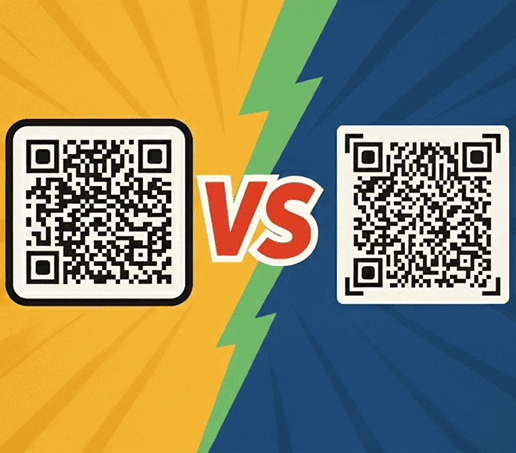
Data Matrix codes and QR codes are both 2D barcodes. However, they’re built for completely different purposes.
While a QR code is familiar for linking users to websites and media content, a Data Matrix code is primarily used for compact, high-density data storage.
As a simple rule, use a Data Matrix code when space, traceability, and industrial scanning are most important.
Use a QR code when you need:
- Easy smartphone scanning
- Custom branding
- Scan tracking
- Stronger customer engagement
You can see the main differences between them below:
|
Feature |
Data Matrix Code |
QR Code |
|---|---|---|
| Barcode type | 2D barcode | 2D barcode |
| Common shape | Square or rectangular | Square |
| Visual identifier | Solid L-shaped border on two sides | Three large corner squares |
| Maximum numeric capacity | Up to 3,116 digits | Up to 7,089 digits |
| Maximum alphanumeric capacity | Up to 2,335 characters | Up to 4,296 characters |
| Data density | Very high; stores data in a small area | High, but usually needs more space | Small-size readability | Excellent for tiny labels and parts | Good, but less reliable at very small sizes | Error correction | Strong error correction for damaged or marked codes | Adjustable error correction levels for different uses | Smartphone scanning | Possible, but less familiar to most users | Very easy with most smartphone cameras | Industrial scanner support | Excellent for production, logistics, and inventory systems | Supported, but more common in customer-facing uses | Direct part marking | Commonly used for marking parts directly | Less common for direct part marking | GS1 and healthcare use | Widely used for regulated product identification | Used for some GS1, retail, and consumer-facing applications | Custom design | Very limited | Strong customization with colors, logos, frames, and CTAs | Dynamic links and analytics | Not commonly used for marketing analytics | Available with dynamic QR codes | Best for | Small labels, healthcare, logistics, manufacturing, and traceability | Marketing, menus, events, payments, websites, and customer engagement |
What Is a Data Matrix Code?
While a QR code is familiar for linking users to websites and media content, a Data Matrix code is primarily used for compact, high-density data storage.
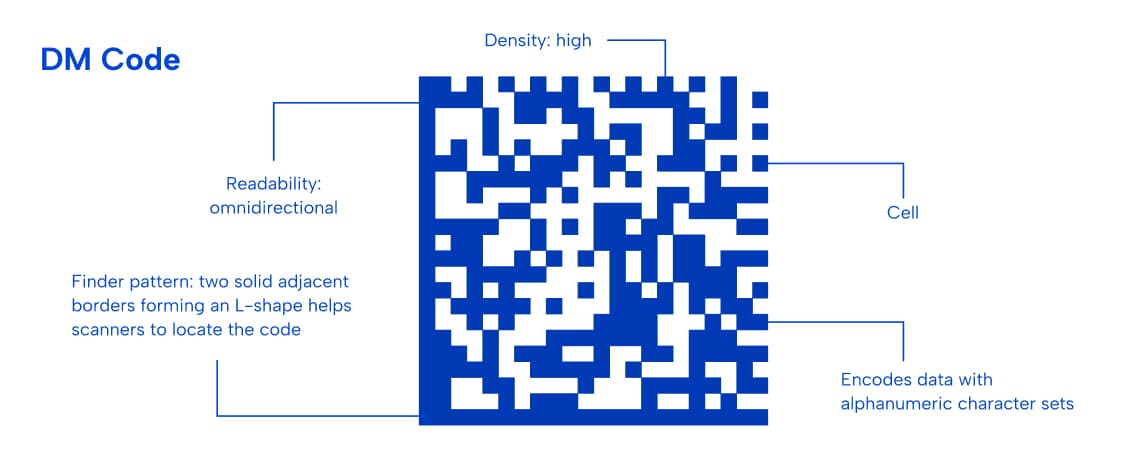
A Data Matrix code is made up of tiny black and white squares arranged in a square or rectangular shape. These codes are mostly used in industrial and logistics settings where space is limited.
Data Matrix code key characteristics include:
- Storing a lot of information in a very small space
- Staying readable even if part of the code is damaged
- Working with industrial scanners and smartphones
- Tracking inventory, parts, and medical supplies
These codes let businesses store product details, serial numbers, and other important data in a compact and efficient way.
What Is a QR Code?
A QR code is a 2D barcode that people can scan with a smartphone to open digital content instantly.
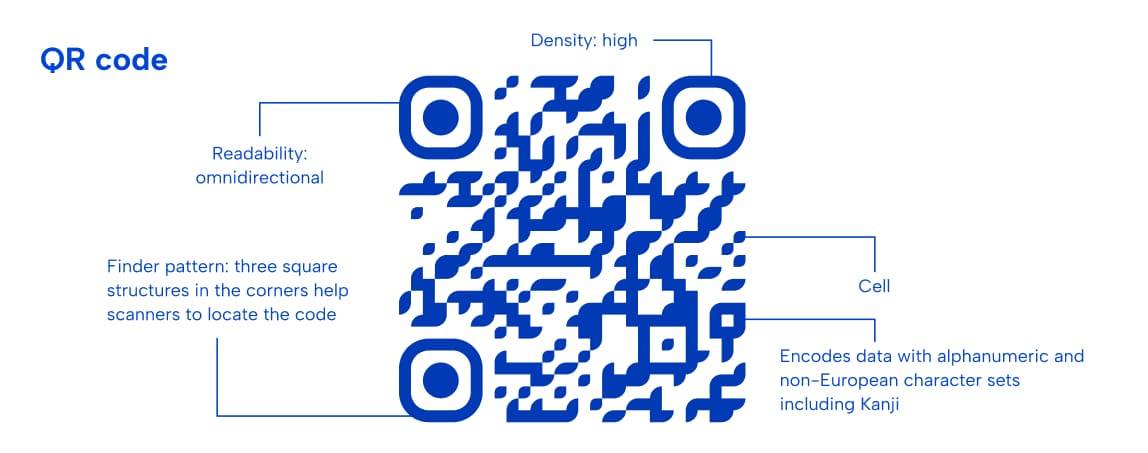
QR codes are commonly used to link customers to websites, menus, and social media profiles.
QR code key characteristics include:
- Being easy to scan with most smartphone cameras
- Link to online content, files, forms, or payment pages
- Completely customizable (colors, logos, frames, and CTAs)
- Tracking scans when created as dynamic QR codes
QR codes help businesses instantly engage customers and measure campaign performance.
Comparing QR Code and Data Matrix Features
A QR code and sa data matrix have completely different features. Read on to discover which which type of code is the best fit for your business.
Maximum data capacity
Data Matrix codes efficiently store up to 2,335 alphanumeric characters. QR codes can hold up to 4,296 alphanumeric characters, making them better for rich media links or detailed content.
If your business needs to encode short product identifiers or serial numbers, a Data Matrix is often ideal. QR codes work best when you want to deliver more complex information or redirect customers online.
Size and data density
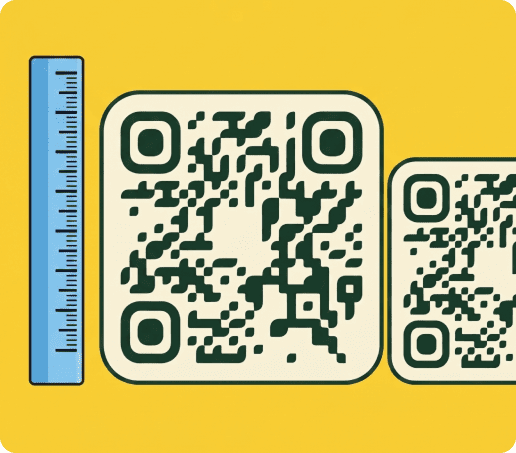
Data Matrix codes excel in small-scale applications. Their compact design fits on tiny components without compromising readability. They can store useful data in a very small area.
QR codes require more space but allow visual branding, colors, and logos.
Below is a comparison of the two types of code:
|
Feature |
Data Matrix Code |
QR Code |
|---|---|---|
| Best size use | Very small spaces | Medium to large printed areas |
| Data density | Higher density in compact codes | Good density, but usually needs more space |
Scanning and device compatibility
Industrial scanners can read Data Matrix codes quickly, even on fast production lines. Smartphones scan QR codes easily, which makes them better for everyday customer use.
Error correction and durability
Both types of codes can still work if part of them is damaged, but they handle this in different ways:
|
Feature |
Data Matrix Code |
QR Code |
|---|---|---|
| Error correction | Can recover data when part of the code is damaged. | Offers different error correction levels depending on the use case. |
| Durability | Very durable. More suitable for harsh conditions and industrial settings | Durable when printed well, but more affected by poor placement, low contrast, folds, or surface damage |
| Main advantage | Reliable scanning on small or damaged codes | Flexible error correction for print, branding, and campaign use. |
GS1 DataMatrix vs QR code
GS1 is a global standards system that helps businesses identify and track products across supply chains. It’s best for:
- Regulated product identification
- Traceability
- Supply chain scanning
QR codes are better for customer-facing uses, such as social media profiles and menus.
Customization and branding
Data Matrix codes allow minimal customization. QR codes can be branded, with color changes, embedded logos, or shaped modules, enhancing marketing appeal. Businesses using QR codes often combine visual identity with functionality.
Static and dynamic content
Data Matrix codes usually store fixed, static product data, such as serial numbers or expiry dates. Once printed or marked, the information normally cannot be changed.
QR codes can be static or dynamic. A dynamic QR code lets you update the destination later. This means that you do not need to print new materials if you change your menu or social media profile, for example.
Get started with your first QR code today
Enjoy full access to QRNow and create custom QR codes that look professional and on-brand. Sign up in seconds and start creating immediately.

5 Examples Where Using a QR Code Is Better Than a Data Matrix
QR codes excel in customer engagement and dynamic applications. Their versatility allows businesses to interact, track, and update content seamlessly.
-

Linking to websites, apps, or useful content
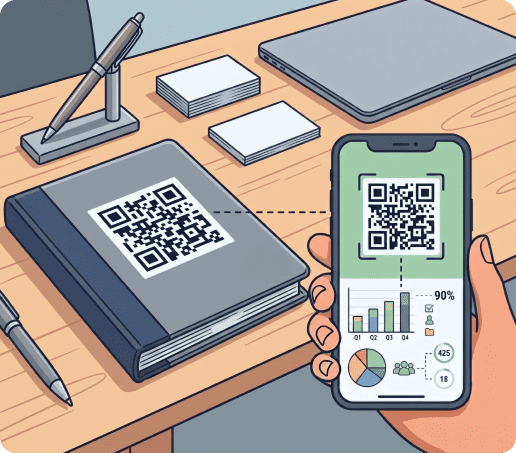
QR codes can direct customers to business pages, social profiles, video tutorials, PDFs, and other content. These solutions give easy access to useful content and help enhance visibility and engagement.
-

Receiving feedback from customers
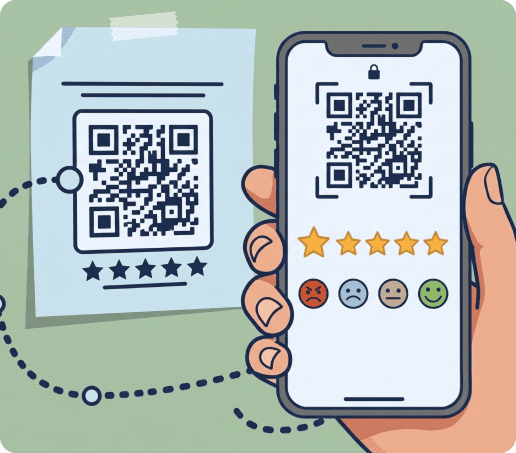
Adding QR codes on product packaging or labels simplifies feedback collection. Customers can leave reviews, surveys, or ratings, providing businesses with actionable insights.
-

Keeping menus up-to-date in restaurants
Dynamic solutions allow customers to view digital menus, place orders, and make payments. Changes can be applied instantly without reprinting materials.
-
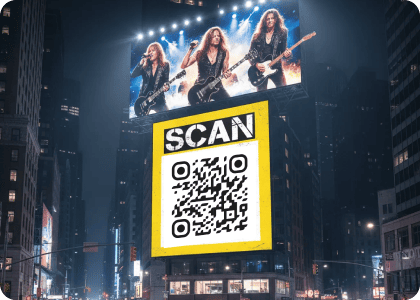
Promoting an event
QR codes streamline event registration, ticketing, and access to event details, simplifying promotions and management. This enhances attendee experience and operational efficiency.
-

Get valuable data thanks to campaign tracking
Dynamic QR codes provide analytics such as scan counts, location, time, and device type, supporting data-driven marketing decisions.
5 Examples Where Using a Data Matrix Is Better Than a QR Code
Data Matrix codes are often used in manufacturing and logistics. They’re used when traceability and reliable scanning are more important than visual design.
Marking small products or components
Data Matrix codes work well on tiny items where a QR code may need too much space. They can store product IDs and other important data in a compact format.
Tracking medical devices and healthcare products
Data Matrix codes are widely used in healthcare. They can help identify regulated items like:
- Medical devices
- Medicines
- Surgical instruments
Direct part marking in manufacturing
Data Matrix codes can be marked directly onto parts using methods such as laser marking or engraving. This makes them useful for parts that need permanent identification throughout production, maintenance, and repair.
Managing logistics and inventory
They can help teams track items, batches, and shipments when labels are small or scanning needs to be fast and reliable.
Labeling items that may be damaged or worn
These codes are useful when labels may face friction, handling, cleaning, or harsh environments.
Their error correction helps keep the code readable even if part of the mark is damaged.
How To Choose Between a Data Matrix and QR Code
When deciding between these two types of codes, consider:
- Purpose
- Environment
- Audience
You should use Data Matrix for tracking, logistics, and high-density needs.
Choose QR codes for customer-facing applications, promotional campaigns, and content sharing.
Both technologies can complement each other in complex business operations.
You can see some of the best situations for each type of code below:
|
Code Type |
Best For |
|---|---|
| Data Matrix | QR Code |
| Small product labels, Parts, Medical items, Inventory, Logistics, Manufacturing, Healthcare, Direct part marking | Websites, Menus, Event pages, Payment links, Apps, Forms, Promotions, Customer-facing campaigns |