What Is GS1 Sunrise 2027?
GS1 Sunrise 2027 is a global initiative led by the organization GS1 to encourage the adoption of 2D barcodes that can carry richer product information than traditional linear barcodes.
The initiative focuses on helping retailers, manufacturers, distributors, and technology scan and process new types of product codes at checkout. These newer codes can include information such as batch numbers, expiration dates, serial numbers, and links to online product content.
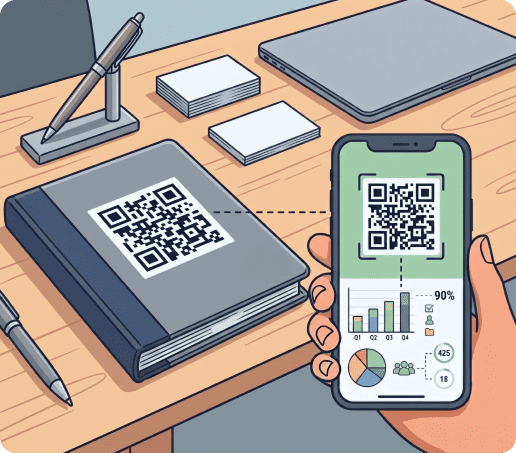
For example, a bottle of juice may contain a QR code encoded with a GS1 Digital Link. A retailer’s scanner can read the product identifier for checkout, while a consumer’s smartphone can access ingredients, nutrition information, recycling instructions, and promotional content from the same code.
GS1’s global goal is for retail point-of-sale systems to be capable of scanning and processing approved 2D barcodes alongside traditional linear barcodes by the end of 2027.
Why Are Traditional Barcodes Changing?
Traditional barcodes were designed primarily to identify products at checkout. As supply chains and consumer expectations evolve, companies need product identifiers that can carry more information and support digital experiences.
GS1 Sunrise 2027 addresses these limitations by promoting 2D barcodes that provide greater flexibility and data capacity.
- Traditional barcodes store limited information.
- Product traceability requirements continue to increase.
- Consumers expect instant access to product details.
- Product recalls require faster and more accurate tracking.
- Regulatory compliance often demands additional data.
- Supply chains need better visibility and efficiency.
- Digital product experiences require connected information.
Understanding 2D Barcode Options for GS1 Sunrise 2027
Several types of 2D barcodes can be used within the GS1 system. The main difference is how product data is encoded and whether the code can also connect users directly to online content.
| Technology | Definition | Role in GS1 Sunrise 2027 |
|---|---|---|
| GS1 DataMatrix | Encodes product identifiers and additional data using GS1 element string syntax. | Supply chain applications, traceability, healthcare, and situations where space is limited. |
| QR Code with GS1 Digital Link | Encodes GS1 identifiers, such as a GTIN, within a web-compatible GS1 Digital Link URI. | Retail packaging where businesses want to combine product identification with consumer-facing digital content. |
| Data Matrix with GS1 Digital Link | Uses GS1 Digital Link URI syntax within a Data Matrix symbol. | Product identification and web-connected applications where a compact Data Matrix format is preferred. |
All three options can carry GS1 product identifiers, along with extra details such as batch or lot numbers and expiry dates. The main difference is how this information is encoded and accessed.
QR Codes with GS1 Digital Link are particularly useful for consumer-facing products because most modern smartphones can scan QR codes directly and open the associated digital content.
Data Matrix codes can also support GS1 Digital Link. However, not all smartphone cameras can scan Data Matrix codes automatically, so they are generally less convenient for consumers.
What Is the Difference Between a Regular QR Code and a GS1 QR Code?
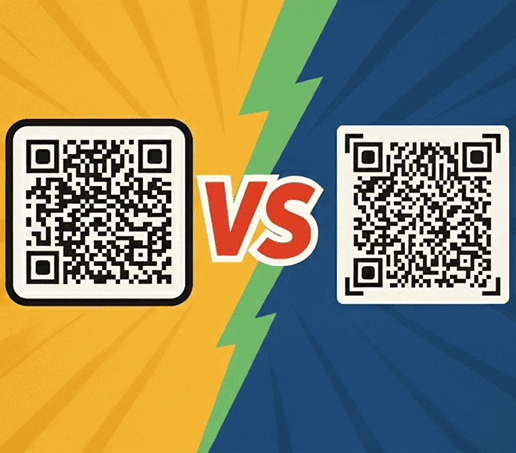
A regular QR code typically connects users to digital content such as a website, product page, contact information, or promotional campaign.
A QR code used with GS1 Digital Link can connect users to online content, but it also contains product identifiers, such as a GTIN. Compatible retail and supply chain systems can read and use these codes, giving them a dual function.
The two codes may look similar, but they are designed for different purposes.
| Regular QR Code | QR Code with GS1 Digital Link | |
|---|---|---|
| Main purpose | Link to online content | Product identification + online content |
| GTIN | Not required | Encoded using GS1 syntax |
| POS use | Not automatically suitable | Designed for compatible retail POS |
| Consumer scan | Yes | Yes |
| GS1 Digital Link | No | Yes |
| Typical use | Marketing | Packaging, retail, traceability + consumer engagement |
A standard QR code is therefore suitable when your goal is simply to connect people with digital content. If the code needs to support GS1 product identification as part of the Sunrise 2027 transition, it must be created and encoded according to the relevant GS1 standards.
GS1 Sunrise 2027 Timeline and Key Dates
The transition is happening in phases, giving retailers, manufacturers, and technology providers time to prepare their systems, packaging, and product data.
While 2027 is the headline milestone, the transition is occurring over several years. Many organizations have already started testing and deploying GS1 Digital Link-enabled barcodes.
2021 to 2023: Early adoption and testing
- GS1 expands awareness of 2D barcode standards
- Pilot projects begin across retail and healthcare
- Technology providers start developing compatible solutions
2024 to 2026: Industry preparation
- Retailers evaluate scanner and point of sale readiness
- Manufacturers begin testing GS1 Digital Link implementation
- Product data management processes are reviewed and updated
- Packaging teams assess 2D barcode placement and design
2027: Sunrise milestone
- Retail environments are expected to support scanning 2D barcodes at checkout
- GS1 Digital Link adoption accelerates across supply chains
- Companies gain access to richer product data through a single scan
Beyond 2027: Continued expansion
- Broader use of connected product experiences
- Improved product traceability and recall management
- Greater integration between physical products and digital content
- Ongoing innovation in retail, logistics, healthcare, and manufacturing
Is GS1 Sunrise 2027 Mandatory?
GS1’s initiative is not a law, government regulation, or legal requirement.
Instead, it is an industry initiative designed to encourage adoption of modern barcode technology. However, you may still need to prepare if major retailers, distributors, marketplaces, or supply chain partners begin requesting support for GS1 compliant 2D codes.
For many companies, adapting early can reduce implementation costs and avoid future operational challenges.
Does Sunrise 2027 Require GS1 Digital Link?
No. No. Sunrise 2027 focuses on making retail point-of-sale systems capable of scanning and processing 2D barcodes using GS1 standards.
GS1 Digital Link is one option for encoding product identifiers in a web-compatible format, but it’s not a requirement of the Sunrise 2027 initiative.
Businesses may choose a QR code with GS1 Digital Link when they want one barcode to support product identification and connect consumers to online information.
How GS1 Digital Link Works
GS1 Digital Link connects a physical product identifier with online information through standardized web technology.
-
A product receives a GS1 identifier
The process begins with a unique identifier, usually a GTIN, that identifies a specific product.
-
Extra product data can be added
Additional information such as lot number, serial number, manufacturing details, or expiry date can be included.
-
The identifier is encoded in a 2D barcode
The information is stored within a QR code or Data Matrix symbol using GS1 standards.
-
The code is scanned
Retail systems, smartphones, or supply chain scanners scan the encoded information.
-
Users are taken to the right content
The system determines what information should be displayed based on the user, location, or device.
-
Information is delivered
Users can access product details, instructions, certifications, recalls, or marketing content.
-
Data can be updated
Digital content may be updated without changing the physical packaging
Benefits of Digital Links for Retail and Consumers
GS1 Digital Link creates a direct connection between physical products and online information. This benefits both your company and your customers by improving product visibility, traceability, and access to accurate information.
More product information in a single scan
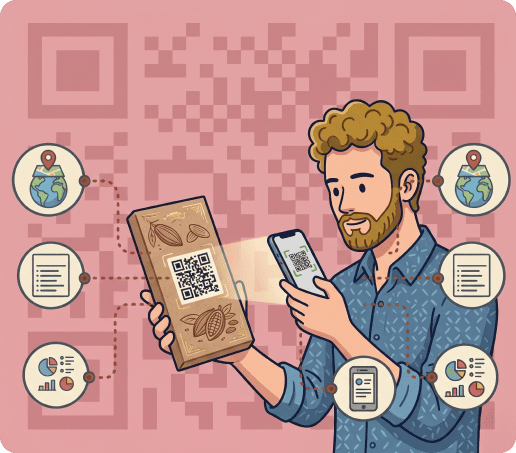
A single scan can provide access to ingredients, allergen information, product manuals, sustainability data, certifications, warranty details, and promotional content.
This reduces the need for multiple labels and allows you to share more information without increasing packaging space.
Better traceability across the supply chain
Traceability becomes easier when product identifiers include batch numbers, serial numbers, and production details. This helps you track products from manufacturing through distribution and retail.
This improved visibility can support product recalls, quality control, counterfeit prevention, and inventory management. It gives companies a clearer view of where products are, where they came from, and how they move through the supply chain.
Easier updates to online product information
Traditional packaging is static. Once printed, changing information can be costly.
Digital links allow you to update online product content instantly while keeping the same product identifier. You can modify product specifications, compliance information, instructional content, or promotional campaigns without redesigning packaging.
Improved transparency for shoppers
Consumers increasingly expect access to detailed product information before making purchasing decisions.
A scan can provide:
- Ingredient lists
- Sustainability claims
- Product origin details
- Recycling instructions
- Product certifications
According to a GS1 consumer research, transparency and trust continue to play a significant role in purchasing decisions as consumers seek more information about the products they buy.
GS1 Digital Link Use Cases by Industry
The flexibility of GS1 Digital Link allows organizations across multiple industries to connect products with relevant digital information.
|
Industry |
Applications |
|---|---|
| Food and beverage | Allergen information, ingredients, nutrition, expiry dates, batch tracking, recalls, origin details |
| Healthcare | Drug verification, dosage instructions, serialization, patient safety information |
| Cosmetics | Ingredients, authenticity verification, usage instructions, sustainability details |
| Apparel and textiles | Product origin, care instructions, material composition, authentication |
| Electronics | User manuals, warranty registration, support documentation, product updates |
| Household products | Safety information, usage guides, recycling instructions |
| Logistics and manufacturing | Inventory tracking, shipment monitoring, asset management |
| Retail | Promotions, loyalty programs, product information, customer engagement |
What Businesses May Need to Prepare
Preparing for GS1 Sunrise 2027 involves more than simply adding a new barcode format. Your company may need to evaluate packaging, data management processes, and technology infrastructure to ensure compatibility with emerging standards.
What Is Dual Marking?
During the transition to 2D barcodes, many products will use dual marking. This means that they will have both a traditional linear barcode, such as EAN/UPC, and a GS1-compliant 2D barcode on the same packaging.
This allows retailers that have already upgraded their systems to use the additional data available in the 2D barcode, while retailers that are not yet ready can continue scanning the existing linear barcode.
Dual marking will remain important during the transition because 2D barcode adoption will happen at different speeds across retailers and markets.
GS1 expects linear barcodes and 2D barcodes to coexist for some time as point-of-sale systems become capable of processing the newer formats.
Packaging and label updates
Many companies will need to review packaging layouts to accommodate 2D barcode symbols. This may require packaging redesigns, label size adjustments, regulatory reviews, and updates to printing processes.
Product data management
The value of this initiative depends heavily on accurate product information. You may need systems that can manage product identifiers, batch numbers, serial numbers, product attributes, and regulatory information.
Maintaining clean and accurate data becomes increasingly important as more information is linked to product identifiers.
Scanner and system compatibility
Not all scanning systems currently support advanced 2D barcode formats. You should evaluate point of sale systems, warehouse scanners, inventory software, ERP platforms, and mobile applications before implementation.
GS1 recommends testing compatibility well before large scale implementation.
Security and Privacy Considerations
As products become connected to online information, your company must also consider data protection, cybersecurity, and long term information management.
Key considerations include:
- Protect product data from unauthorized changes.
- Use secure hosting environments.
- Monitor access permissions regularly.
- Verify information accuracy before publishing.
- Maintain compliance with applicable privacy regulations.
Frequently Asked Questions
What does GS1 stand for?
Toggle faqs
GS1 is the name of the international not-for-profit standards organization behind the GS1 system. Despite a common misconception, GS1 does not officially stand for “Global Standards 1.”
The organization develops and maintains global standards for product identification, barcodes, data sharing, and technologies such as GS1 Digital Link.
Why is Sunrise 2027 changing retail?
Toggle faqs
Sunrise 2027 supports the adoption of 2D barcodes that can store significantly more information than traditional linear barcodes. This allows retailers to access product identifiers, batch numbers, expiry dates, and other data from a single scan.
The initiative also supports better inventory control, faster recalls, improved checkout processes, and richer consumer experiences through connected digital content.
Are traditional barcodes being phased out?
Toggle faqs
Traditional barcodes are not being eliminated by Sunrise 2027. Instead, the initiative encourages retailers and supply chain partners to support 2D barcodes alongside existing barcode formats. Many products will continue using linear barcodes for years.
Who needs to prepare for the transition?
Toggle faqs
Any company involved in manufacturing, distributing, selling, or managing physical products should evaluate its readiness. This includes retailers, consumer goods brands, healthcare providers, logistics companies, wholesalers, and eCommerce sellers.
Can consumers already scan the new 2D barcodes?
Toggle faqs
Yes. Most modern smartphones can scan QR codes and access linked digital content without requiring specialized equipment. However, the experience depends on how the code has been configured and what information the product owner provides.
What is the difference between a GTIN and a barcode?
Toggle faqs
A GTIN, or Global Trade Item Number, is a unique identifier assigned to a specific product. A barcode is the machine readable symbol that carries that identifier.
In other words, the GTIN is the product number itself, while the barcode is the method used to encode and scan it. Multiple barcode formats can contain the same GTIN.
What is a resolver in GS1 Digital Link?
Toggle faqs
A resolver is a service that interprets a GS1 Digital Link and directs users or systems to the appropriate destination.
After a code is scanned, the resolver determines what information should be displayed, such as product details, instructions, recalls, certifications, or marketing content.
Will the new GS1 codes work across different countries?
Toggle faqs
Yes. GS1 standards are designed for international use and are supported by GS1 member organizations around the world. A compliant identifier can be recognized across participating markets, helping companies maintain consistency in product identification and data sharing.
This global approach simplifies cross border trade, improves supply chain coordination, and supports international retail operations.